The “Big Rocks” method made famous by Stephen Covey may be something with which you are familiar (or not). It is simplified in Covey’s statement “the key is not to prioritize what’s on your schedule, but to schedule your priorities.”
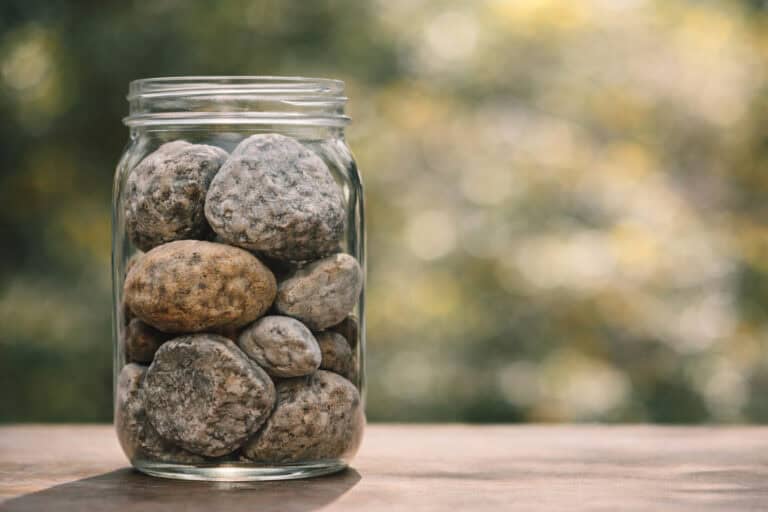
I learned that Stephen Covey’s illustration was very memorable. Large fist-size rocks were placed into a one-gallon wide-mouthed Mason jar. When no more of the rocks would fit, he asked, “Is the jar full?” The audience cried out “yes”.
Then he poured in a large pail of pebbles, shaking the jar to settle them into the spaces between the big rocks. Again he asked, “Is the jar full?” The response was less certain.
Finally, he poured in water, only stopping when no more would go in. It was then obvious to everyone that the jar was, finally, full. And then he asked, “What is the point of this illustration?”
Of course, overachievers declared, “no matter how full your schedule, if you try really hard, you can always fit more into it!” I have to grin at that response as it also fits for those of us who are terrible at estimating how big our “rocks” are.
The demonstrator responded that the illustration teaches us that if you don’t put the big rocks in first, you’ll never get them in at all. The jar represents life and all that goes into it. The big rocks represent what is most important in our lives: our faith, education, finances, time with our loved ones, teaching or mentoring others. They represent our main goals in life – activities we care about the most.
The smaller rocks, sand, and water, represent all the other matters that fill our lives; the good, the bad, the unanticipated, the anticipated, the less important, the frivolous.
Then my favorite devotional author, Henry Blackaby, put a spin on this illustration that was powerful for me.
He said when God told Abraham He was going to destroy Sodom and Gomorrah, Abraham’s life was immediately and radically affected. Noah could not carry on business as usual once he knew what God was planning for his generation. Knowing that God is preparing judgment brings a sobering reality to Christians, helping us recognize what is eternally significant and what is not. Big Rocks!
Of course, Blackaby goes on to point to Peter’s cautioning his listeners that a catastrophic time of judgment is coming assuring them this is not mere speculation; it is certain and imminent. He then asks the crucial question that applies to each generation, according to Blackaby.
“What kind of persons ought you to be?” With judgment pending for us and countless millions of people facing destruction, Peter was asking “how should we live our lives?”
Blackaby aimed his reflection to cover the many Christians who attach great value to temporal things – hobbies and possessions that consume us and leave little time or energy to invest in what is eternal. He says we Christians, more than anyone else, should be sensitive to the times in which we live — walking so closely with God that if He were preparing to bring judgment upon people, we could warn those in imminent peril.
This was powerful for me to consider. Blackaby’s final statements were hard-hitting: 1) since Christ has been long-suffering in His return so that no one might perish (2 Peter 3:9), should we not invest our effort in building God’s eternal kingdom? 2) Should there not be an urgency about us to complete the tasks that God gives us?
The timing could not have been more appropriate for me. I thought of how in the past year my focus narrowed from helping people capture and save their own life stories to guiding them to do the same with the lives of their ancestors.
Impressed upon me was God’s directive in Deuteronomy 6 to not only obey the commandments and decrees He has given us, He charges us to keep them “on our hearts” and “impress them on your children” and “talk about them when you sit at home and when you walk along the road, when you lie down and when you get up” and “write them on the doorframes of your house and on your gates.”
So we are not only charged with knowing about our ancestors and their lives and lessons they would pass along to us, we are charged with actually preserving and passing those along to our future generations. And tying them to God’s purpose and commands.
I love having discovered in my research my great-great grandfather’s faith through amazingly hard times and struggles, realizing he passed that along to his granddaughter, my grandmother. And she was a major influence in my spiritual growth. Not until I did this work was I aware of or able to put that history and information together. Truly a blessing.
Just as Tonia Wellons put it (as I shared in a previous blog), “Standing on the shoulders of eight generations, I carry forward not just their DNA, but their dreams, their courage, and their unwavering belief that this country, for all its flaws, is our home. We helped build it, we fought for it, and we continue to perfect it. That is my American story – one of transformation, resilience, and the unbreakable bonds of family that have sustained us for over two centuries.” She inspires me. Standing on the shoulders – love it!
Thus, I felt called to develop a system of preserving family legacies that guarantees preservation for generations to come. And after teaching my Family History Bootcamp several times last year, I have decided to shrink it down to teaching just the basic structure of the system – because I can offer that for FREE. Yes, no cost for my students to build the family history structure – and quickly – within the space of a week.
You can check out the details here: rdmgo.candymccune.com/family-history-bootcamp-signup-page
And act quickly! It is being delivered THIS COMING MONDAY. And feel free to pass it along – do it with your family members or friends. As Deuteronomy 6 has shown us, this is a Big Rock.Remember – if you don’t get the Big Rocks in first, you may never get them in at all.